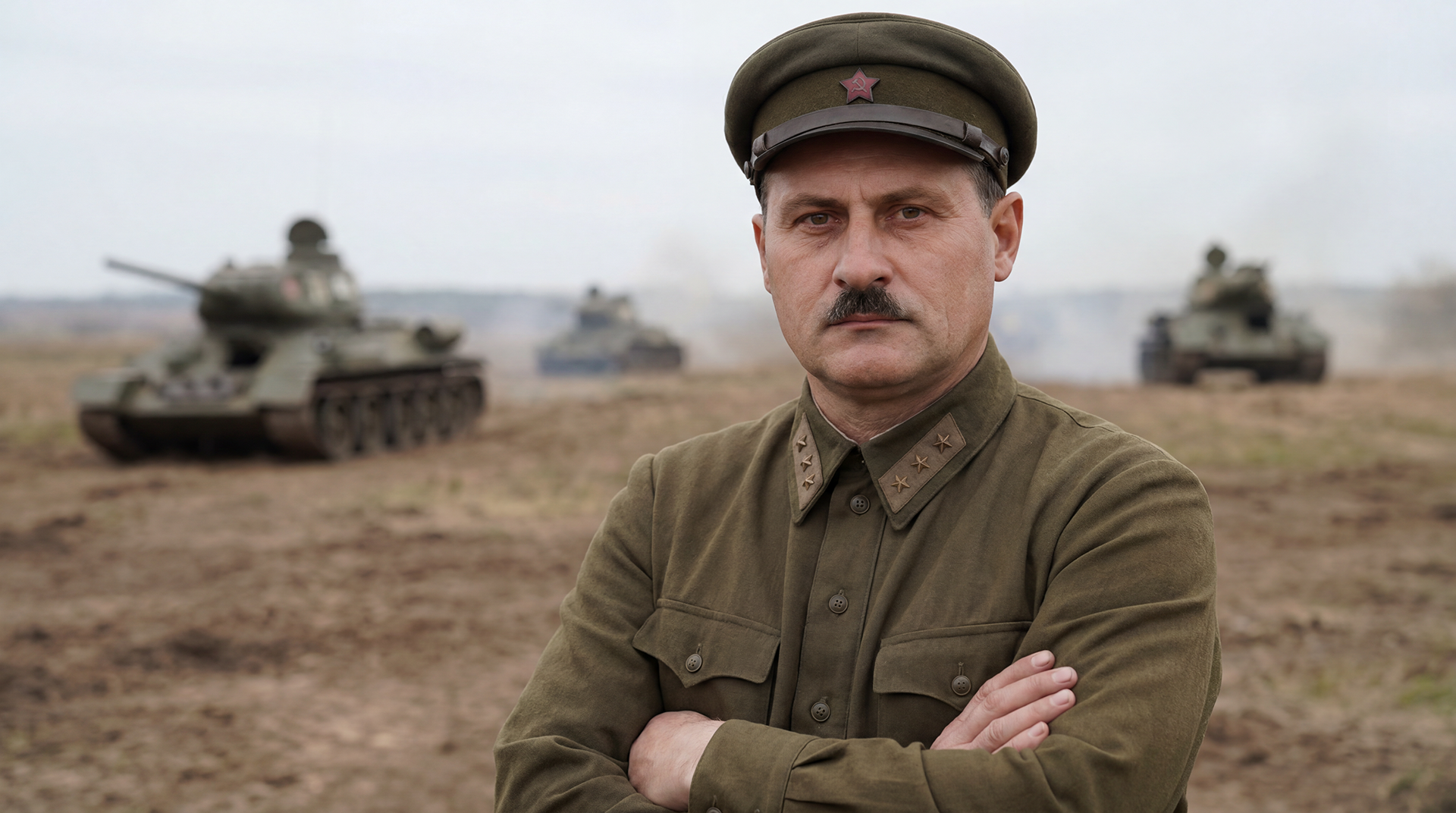
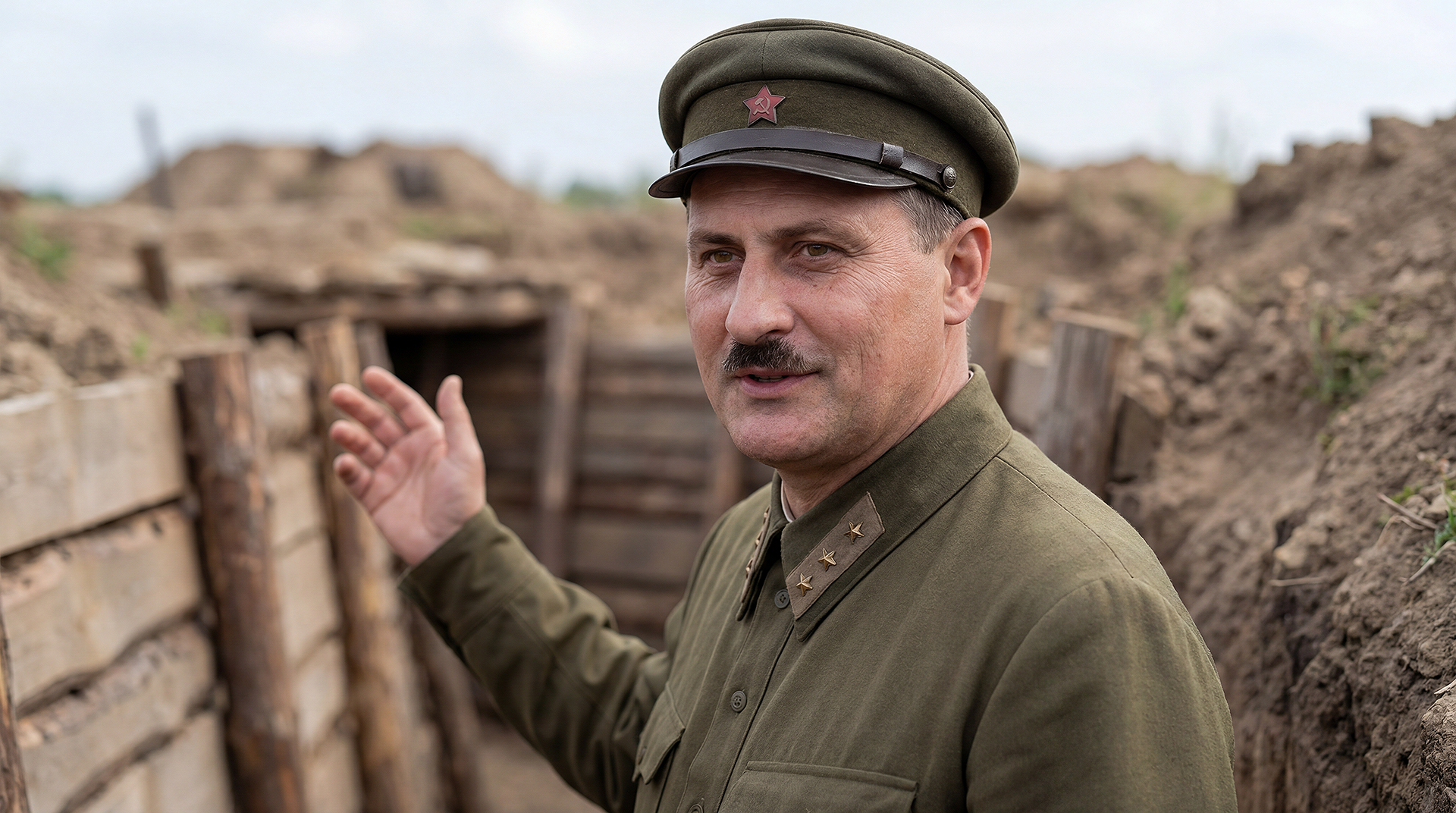
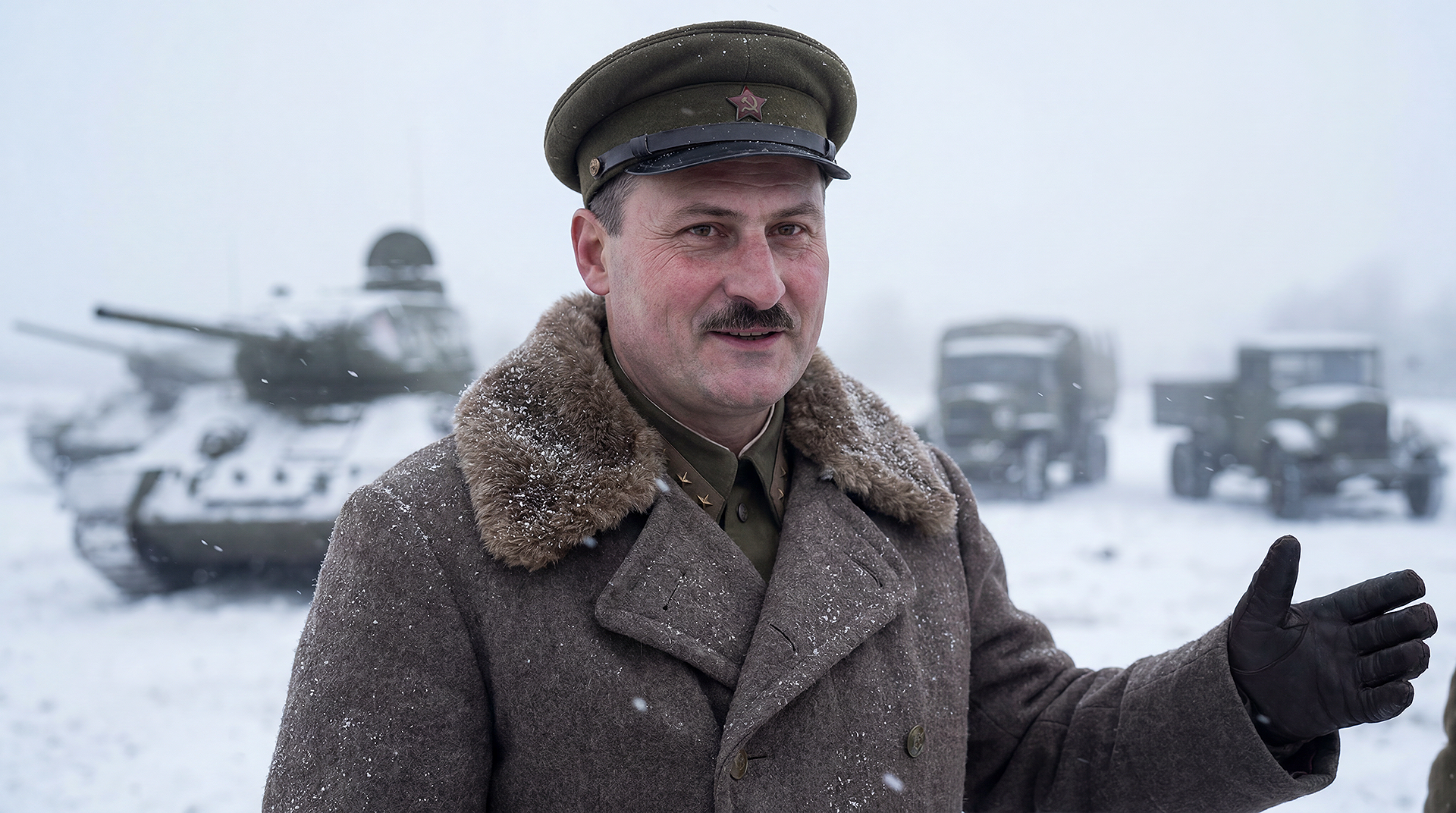
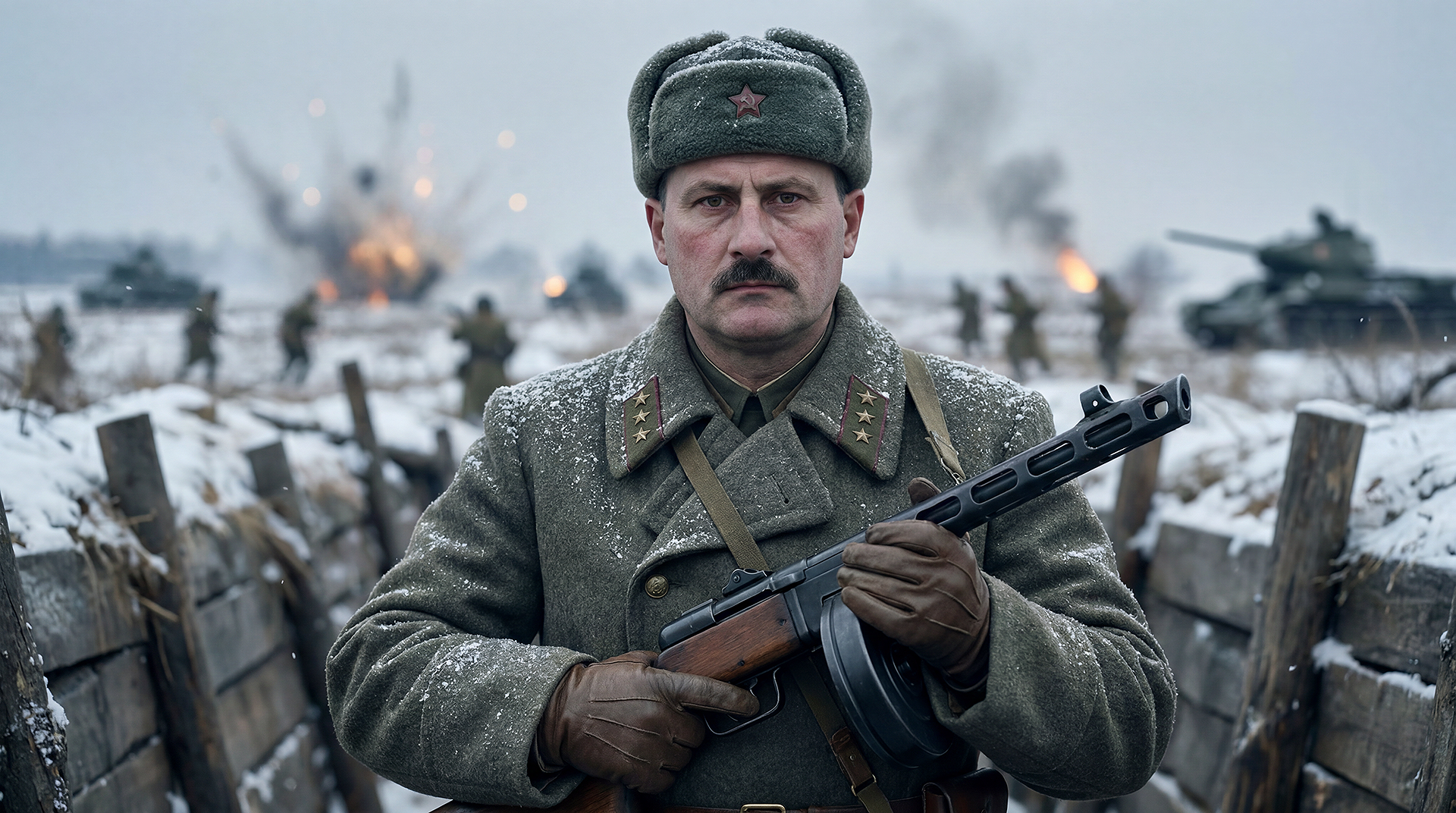
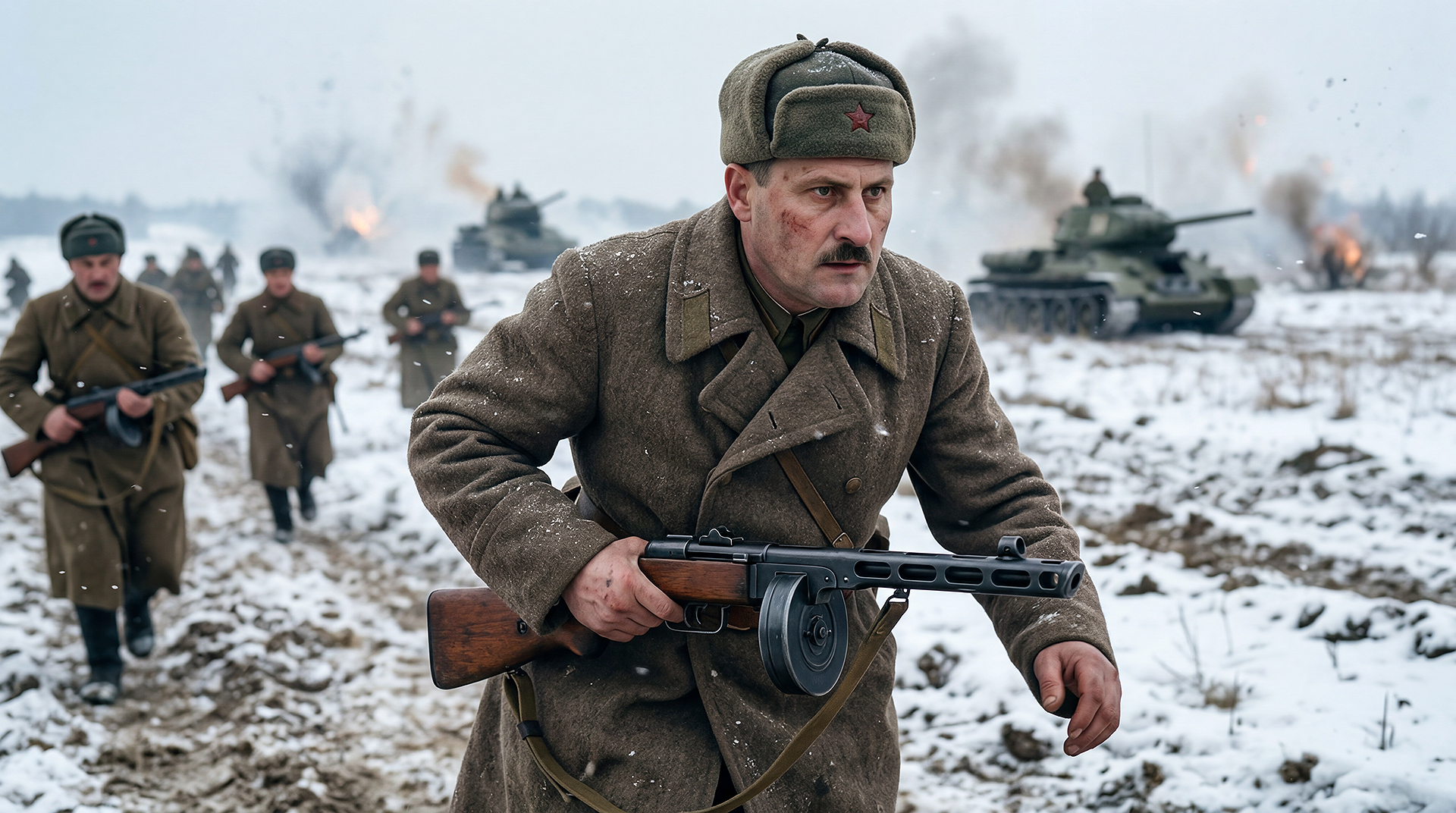
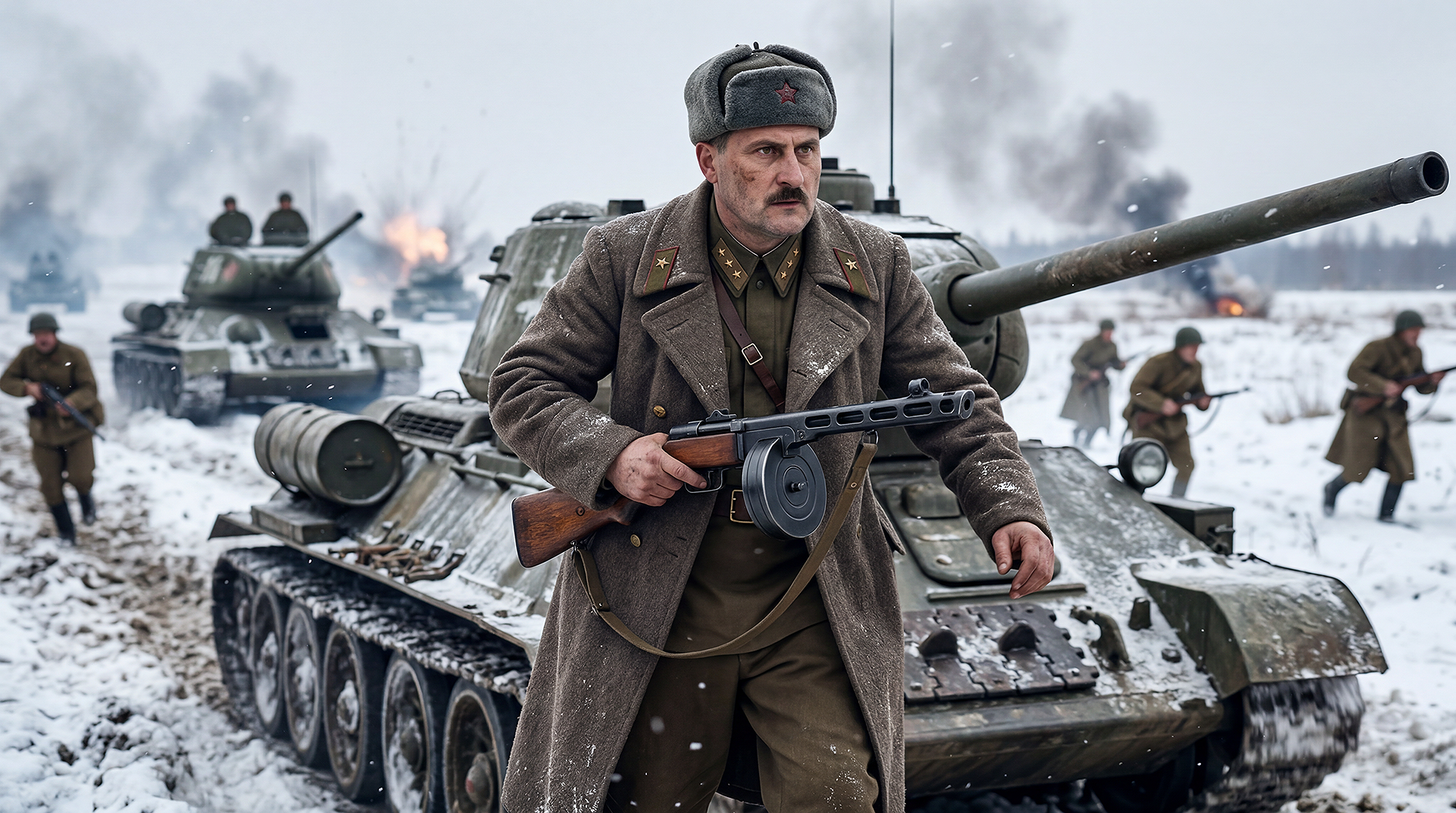
Family members and comrades-in-arms especially emphasized that he was a demanding, caring, brave, and courageous person.
From the memories of Bakhtiyar Suleymanov, a veteran of the Great Patriotic War and lieutenant colonel
I had many meetings with my dear and kind uncle — between 1938 and 1941 I met him often, and while he was at the front we corresponded by letters.
Whenever he came to our home, he would always ask about my studies, give me arithmetic problems, and ask what books I was reading. He planned for me to study in Nakhchivan and later in Baku. Although he discussed this idea many times with my parents, they did not agree, citing travel difficulties and my need at home for household work. In 1941 the war began, and the question of my education was forgotten...
Three letters came from my uncle at the front to our family. At the beginning of the letters, along with my parents’ names, he would also mention my name. This made me very happy.
He had also attached to his second letter a photograph of himself in uniform with the rank of captain. My mother noticed a scar above his right eye in the photograph and became anxious; she immediately told me to write a letter and ask the reason. In his reply he wrote: “Do not tire yourselves over small matters; a bush scratched my eyebrow. For now, do not write letters; we are leaving for the front.” It turned out that the “bush” had actually been a shell fragment...
My uncle placed great importance on science and education, and his wish was fulfilled by me, by his daughter Shafika, and by his grandchildren Yagut and Ramiz, who graduated from various educational institutions.
From the memories of Jamil Sayilov, Ismayil Sayilov’s nephew, associate professor at Azerbaijan State Pedagogical University and Candidate of Biological Sciences
I saw my uncle Ismayil only three times. He lives before my eyes exactly as I saw him: tall, broad-shouldered, serious, somewhat stern, and with the build of a strongman, yet very gentle by nature, pleasant in manner and speech. But my uncle was also quite demanding.
My first meeting with him was in the summer of 1934. We had set up a tent on a plain about one hundred meters from a spring in the Novbashi summer pasture of Bartaz. My uncle and his wife, Mrs. Mahbuba, had come to visit us. I should say that Mrs. Mahbuba was also a very sensitive and noble woman. My uncle had met her at the Higher Party School and married her. Mrs. Mahbuba worked in various positions and later served as editor of the newspaper “Sharq Qapisi” in Nakhchivan.
One day I came late to the tent. When my uncle asked why, I tearfully told him that they had not let me ride the wooden swing. At that time swings were made from wood, and we called them “juv-juka”. After calming me down, my uncle stood up, took an axe, held my hand, and we went together into the forest. He cut two trees suitable for a swing. He carried the trees himself and gave me the axe. Then, seeing that I could not manage it, he took the axe from me and gave me his cap instead. After walking for a while, he noticed that I was tired and put me on his shoulders. In this way, with me on his shoulders and two trees and an axe in his hands, we reached the tent. My uncle made a swing from the trees, put me on it, and swung me for a long time. The swing my uncle made became the most precious gift for us children.
My second meeting with him was in 1935. His daughter Shafika had just been born, and I went with my mother to see her.
We met for the third time in 1937. My father’s elder brother Novruz had passed away. My uncle Ismayil had come to mourn his brother and stayed for about a week. During those days, he helped me prepare my lessons. One day he gave me an arithmetic question and asked how many shahis there were in a manat and how many kopecks in a shahi. I could not calculate it. He gave me an assignment and went to our aunt Mashadi Azat’s house. When he returned in the evening, he asked me about the assignment. I had not completed it. He pulled my ear, and he pulled it hard. Paying no attention to my crying, he instructed me to complete the assignment and then lay down on the bed.
I completed the assignment earlier than the time given and came to my uncle. He had dozed off. Timidly, I shook him and woke him. He looked at his watch and asked me about the assignment. Satisfied with my answers, he stroked my head and smiled.
He was both demanding and, at the same time, gentle...
In 1942, my uncle called from the Minjivan station and spoke with my father and aunt. He said that he was going to war. Despite my uncle’s objection, my father, Isfandiyar, went to Minjivan on horseback. Unfortunately, he could not reach the train in time. I can imagine what feelings my father experienced along the way...
In September or October 1943, my father received another letter from him. In the letter, he wrote that he had received the new military rank of major and that we would soon hear another piece of good news. He did not write what the good news was. My father, who had prepared a reward for the postman bringing the happy news, was instead brought an issue of “Bakinski Rabochi” containing a large article titled “The Legendary Captain,” which told of his brother’s heroic death. My father was a very resilient man. I do not remember him ever losing heart during hard and difficult days. But my uncle’s death shook my father deeply.
I remember that our People’s Poet Suleyman Rustam came to my uncle’s mourning ceremony. He gathered all of my uncle’s letters and the poems he had sent us and took them to Baku.
Hikmat Mahmud
Keçdin döyüşlərdən Koroğlu yolu,
“Odlar ölkəsi”nin a qartal oğlu,
Qoluna güc verdi elin qüdrəti,
Qanında qaynadı Vətən qeyrəti.

Düşdün min alova, düşdün min oda,
Qoymadın verilsin torpağım yada,
Dedilər Sayılov İsmayıl harda,
Orda qələbə var, orda zəfər var,
Belə görüb səni cəbhəçi dostlar.

Görmüsən qatilin zülmün, zillətin,
Ancaq əyilməyib o dağ qamətin.
Duymusan dərdini elin, millətin
Satqından, cahildən min əhd almısan
“Azərbaycan dəyanəti” olmusan.

Süngünlə qələmin qoşa döyüşdü
Sənin hər hünərin dillərə düşdü.
Nəcib arzuların qəlbimə köçdü,
Adını tarixə əbədi yazdın,
Ey şair qardaşım, döyüşçü dostum!
From the memories of Maharram Rahimov
I was Ismayil Sayilov’s comrade-in-arms and closest friend. When the war began, Ismayil Sayilov was head of the Department of Arts of the Nakhchivan Autonomous Republic. He was appointed battalion commissar in the unit where I served. I was also a political leader in the company of that unit. Our unit was a cavalry battalion. First we were in Nakhchivan, then we crossed into Iran. Later our army went to the front, while we had to remain in Tabriz. Through Ismayil Sayilov’s personal initiative, we received permission to go to the front. In December 1941, the assault on the Kerch Peninsula began across the ice of the Sea of Azov, and we liberated the peninsula from the fascists. At that time, Ismayil Sayilov was an example to all of us as a brave and courageous man.
In April 1942, Ismayil Sayilov was appointed both commander and commissar of the battalion. On May 7, 1942, the enemy launched an attack using large numbers of aircraft and tank units. We retreated while fighting for every step of our land. Thus, by May 14, after fighting our way back, we reached the city of Kerch and took defensive positions on the hills. Then we were ordered to cross the sea. Everyone crossed by whatever means they could. Ismayil had crossed a day before me and had gathered the remaining men of the unit near the city of Temryuk. According to orders, we were in Krasnodar, Astakhayevsk, Krymskaya, and Tikhoretsk. In June, we received orders to go to Makhachkala. After staying there for several days, the battalion was sent to another city. There the battalion rested for a while and received reinforcements. In mid-June, an order was given for the command and political leadership to be sent to military headquarters in Tbilisi. At that time, I and six comrades went to Tbilisi. The remaining rank-and-file soldiers were taken under Ismayil’s leadership to the 47th or 51st Army...
Miragha Aliyev, deputy for political affairs of the 416th Azerbaijani Rifle Division
In March 1943, Captain Ismayil Sayilov, head of the Department of Arts of the Nakhchivan Autonomous Republic, came under my command. Captain Sayilov was appointed deputy commander for political affairs of the first battalion. The first battalion was stationed near Taganrog, in a garden-filled village called Primovka on the shore of the Sea of Azov. Along with the battalion’s defense and the personnel’s food and clothing needs, maintaining their moral and political condition at a high level was directly Sayilov’s responsibility.
On October 14, 1943, our regiment had to cross the Molochnaya River between the villages of Tikhonovka and Konstantinovka, break through the fascists, and seize the highest hills northwest of Melitopol. At 3 a.m., the regiment commander called the battalion commanders and political workers to give the combat order. After the order was issued, I instructed Sayilov to send his deputy into battle and to remain in reserve himself. If I were put out of action, he was to act as deputy regiment commander. After Captain Sayilov returned to the battalion, he told his deputy, Aghamoghlan Rzayev: “The major ordered me to remain in reserve today and not go into battle. But I have always led the fighters behind me and inspired them. This battle for the liberation of Melitopol is the hardest battle. No, you stay at battalion headquarters; I will go.”
At exactly 5 a.m., the combat operation began. The companies of the battalion crawled forward, reached the Molochnaya River, and began crossing to the left bank. At that moment, enemy flares lit up the entire area and exposed our fighters. The enemy opened heavy fire toward us. To complete the operation, they used all their firepower and attacked. At about 6 o’clock, I. Sayilov contacted me by telephone and asked who was attacking on the right flank. I told him that there was no one to the right of the first battalion. He said that there was a detachment of submachine gunners on the right. Before our conversation ended, the detachment of submachine gunners on the right attacked our men.
It became clear that the enemy had used deception: they had put on our military uniforms and attacked us. Sayilov raised the first company of the battalion into hand-to-hand combat. The enemy was trying to encircle us. Sayilov insisted that artillery fire be opened. Like Captain Gastello, he asked for fire to be directed onto his own position. The connection was cut while he was speaking with me on the telephone. No matter how much I called out to him, there was no answer. This created conditions for the second battalion to attack. Around 80 enemy submachine gunners were destroyed. This battle cost us dearly. Many of our fighters, including the moral father of our soldiers, the battalion commander and deputy for political affairs, Captain Ismayil Sayilov, died heroically.